


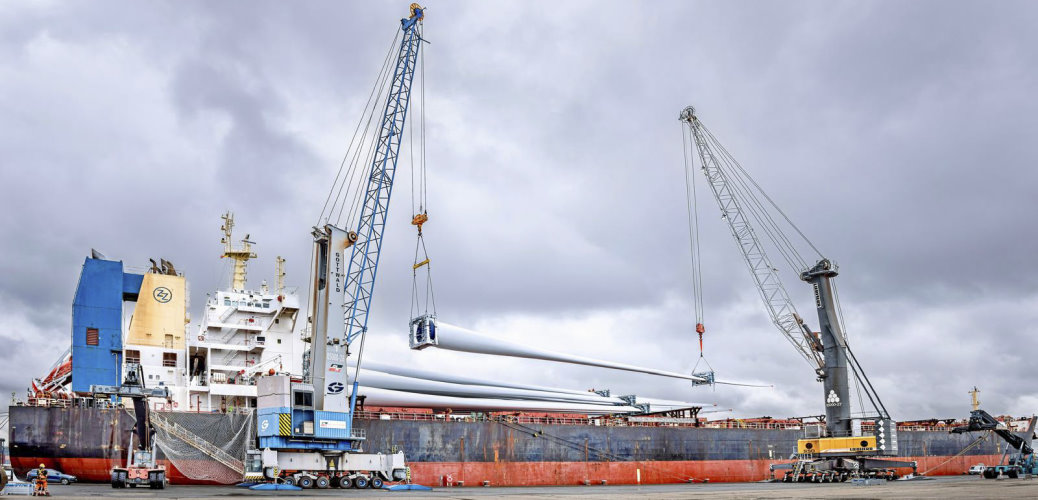
As offshore and onshore wind farms continue to increase in size, the transport of windturbine components has become one of the most demanding tasks in project cargo logistics. Modern wind turbine blades regularly exceed 80 metres in length,with some next-generation designs approaching 120 metres.
While these blades are relatively lightweight compared to other industrial cargo, their extreme dimensions create unique transportation challenges. During loading, sea transport and unloading operations, even small load concentrations can result in costly damage or structural deformation.
For this reason, every wind turbine blade shipment requires a carefully engineered transport and securing plan.
Unlike conventional project cargo, wind turbine blades combine extreme length, relatively low structural stiffness, sensitive composite materials and a large exposed surface area. These characteristics make them particularly vulnerable to bending stresses, torsional forces, vibration, uneven load distribution and surface damage during transport. Vessel motions generated by waves and weather conditions further increase the engineering challenges that must be addressed.
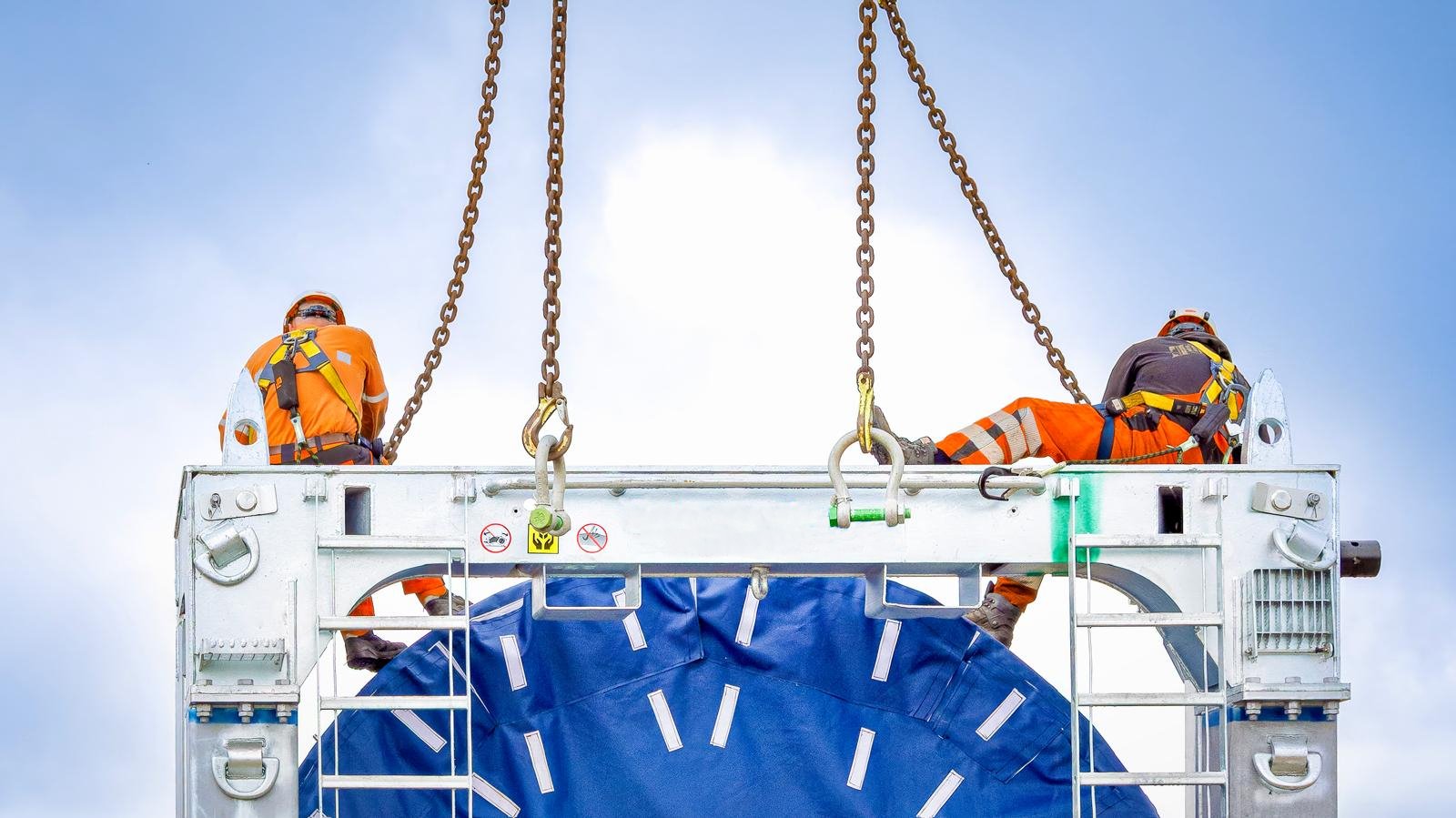
Wind turbine blades are commonly transported using specially designed transport frames, saddles or cradles.
These support structures distribute loads over larger surface areas and prevent damaging point loads on the blade shell.
Depending on project requirements, wind turbine blades may be transported as breakbulk cargo on heavy-lift or multi-purpose vessels, or on barges supporting offshore construction projects. The chosen method depends on blade dimensions, destination, vessel availability and project schedules.
A blade transport frame is only as effective as the securing system used to connect and immobilise it.
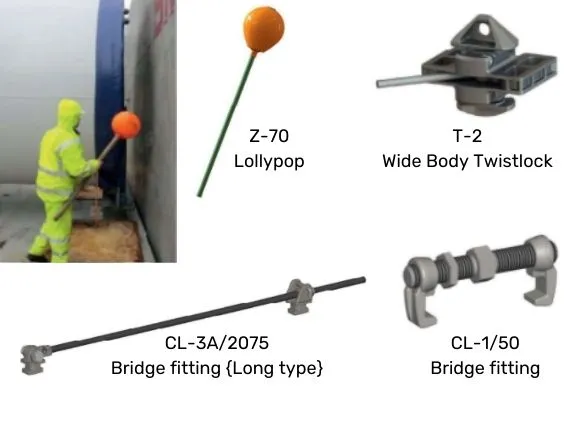
Marine transportation exposes cargo to rolling, pitching, heaving and other accelerations generated by vessel motion. To resist these forces, operators typically use a combination of twistlocks, lashing chains, webbing straps, bridge fittings, D-rings, pad eyes and protective fender systems. The objective is to immobilise the transport frame while maintaining the blade geometry throughout the voyage.
One of the most important engineering principles in wind turbine blade transport is load distribution.
Concentrated forces can introduce hidden damage within the composite structure that may not be visible during inspection but could affect long-term performance after installation.
Transport engineers focus on achieving even load distribution through controlled contact pressures, adequate support spacing and the prevention of local stress concentrations. All transport arrangements should be aligned with the blade manufacturer's recommendations, as every blade design has unique transport limitations.
As turbine capacities continue to grow, blade transport equipment has evolved significantly.
Modern transport frames are designed to support faster loading operations, reduce cargo movement, improve structural stability and increase stacking efficiency. These developments contribute directly to safer operations and more reliable project execution.
Specialised securing components play a key role in achieving these objectives while keeping installation schedules on track.
The offshore wind sector is pushing transport logistics to new limits. Increasing blade lengths require larger transport vessels, stronger securing systems and more advanced engineering calculations.
As blade dimensions continue to grow, future transport solutions are expected to focus on larger offshore turbine components, improved transport frame designs, digital load monitoring and more efficient lashing and port handling systems. These innovations will help the industry manage increasingly complex renewable energy projects safely and efficiently.
As renewable energy projects expand worldwide, safe and reliable transport solutions will remain critical throughout the wind turbine supply chain.
Transporting wind turbine blades is far more complex than moving conventional project cargo. Their size, flexibility and sensitivity require carefully engineered support arrangements and professionally designed securing systems.
By combining proper load distribution, certified securing equipment and project-specific transport engineering, operators can minimise risk and ensure that high-value wind turbine components arrive safely at their destination.
How are wind turbine blades transported by sea?
Wind turbine blades are typically transported as breakbulk cargo using transport frames, saddles or cradles that distribute loads evenly and protect the composite structure during the voyage.
Why is load distribution important when transporting wind turbine blades?
Uneven loading can create hidden stresses within the composite blade structure. Proper load distribution helps prevent deformation, cracking and long-term structural damage.
What securing equipment is used for wind turbine blade transport?
Depending on the project, transport arrangements may use lashing chains, web lashings, twistlocks, bridge fittings, D-rings, pad eyes and custom-engineered securing systems.
Can wind turbine blades be transported on deck?
Yes. Large blades are frequently carried on deck of multipurpose vessels, heavy lift vessels or barges when dimensions exceed the limits of container transport.
Do wind turbine blade shipments require engineering calculations?
Yes. Engineering calculations are often used to verify load distribution, securing forces, support arrangements and vessel accelerations to ensure safe transport.
How long can modern wind turbine blades be?
Modern wind turbine blades regularly exceed 80 metres in length, with some next-generation designs approaching 120 metres.
Please enter your contact details and query below and our team will reply to your request today. Fields marked * are required

In our free e-catalogue , you will find all the info and photos about our solutions for fixed lashing, loose lashing, lifting and rigging gear. Fill in the form below and you will receive your e-catalogue quickly.

