


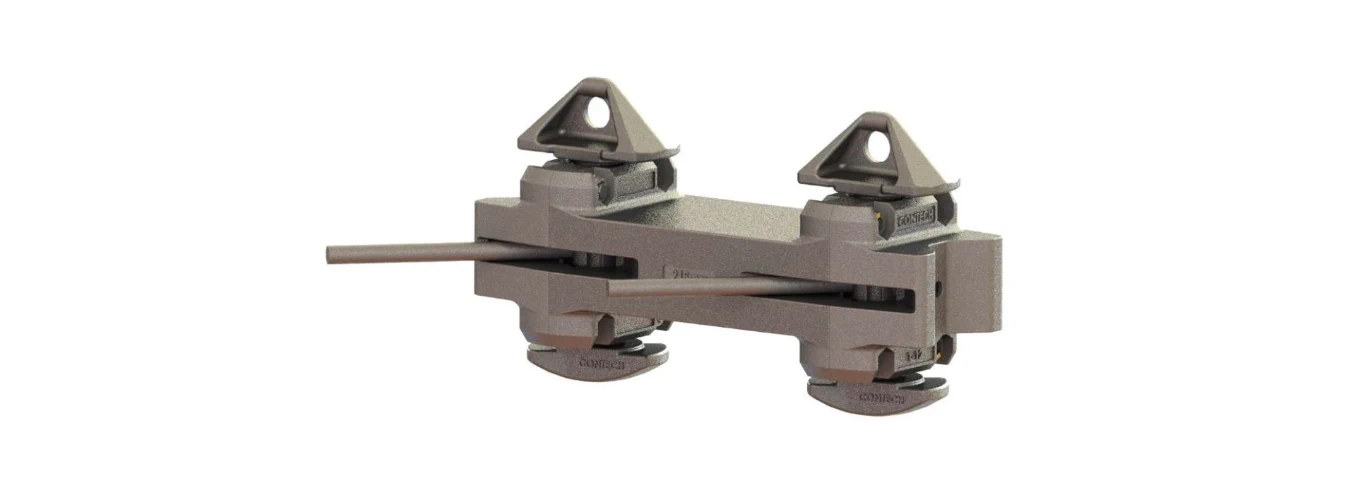
Wind turbines and their blades are exceptionally large, heavy, and costly to transport. To minimize logistics time and reduce project delays, shippers typically choose the fastest and most efficient transport routes. Over the past years, hundreds of wind turbine components have been secured using CONTECH® lashing equipment, including the T‑12 series, which is widely recognized as one of the most reliable solutions for wind‑blade transport.
The double twistlock T‑12 significantly speeds up vessel loading operations and increases loading density, supporting safer and more efficient stowage of oversized windmill frames. Its design ensures a stable and rigid interconnection between stacked frames, which is critical when transporting long and wind‑sensitive components.
In this blog, we provide deeper insight into the operation, maintenance, repair guidelines and spare parts for the T‑12 system. Dedicated manuals and technical leaflets are available internally and used as reference material during engineering and inspection processes.
The double intermediate twistlock T‑12 is engineered to:
The T‑12 is typically used between intermediate layers of wind‑blade transport frames and can also be applied when standard container twistlock spacing does not suffice.
By combining speed, safety, and durability, the T‑12 has become an essential component in the logistics chain for modern wind‑energy projects.
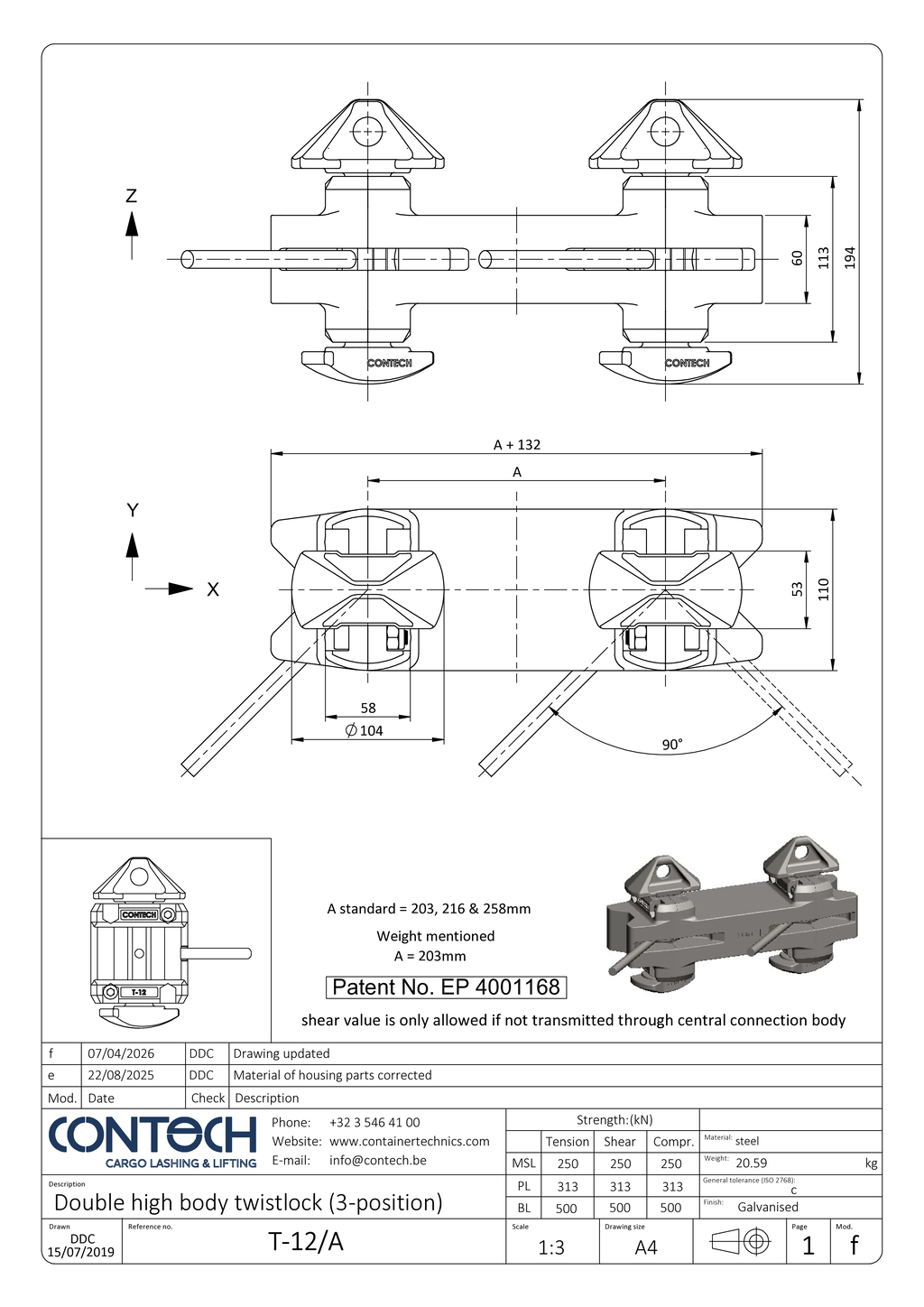
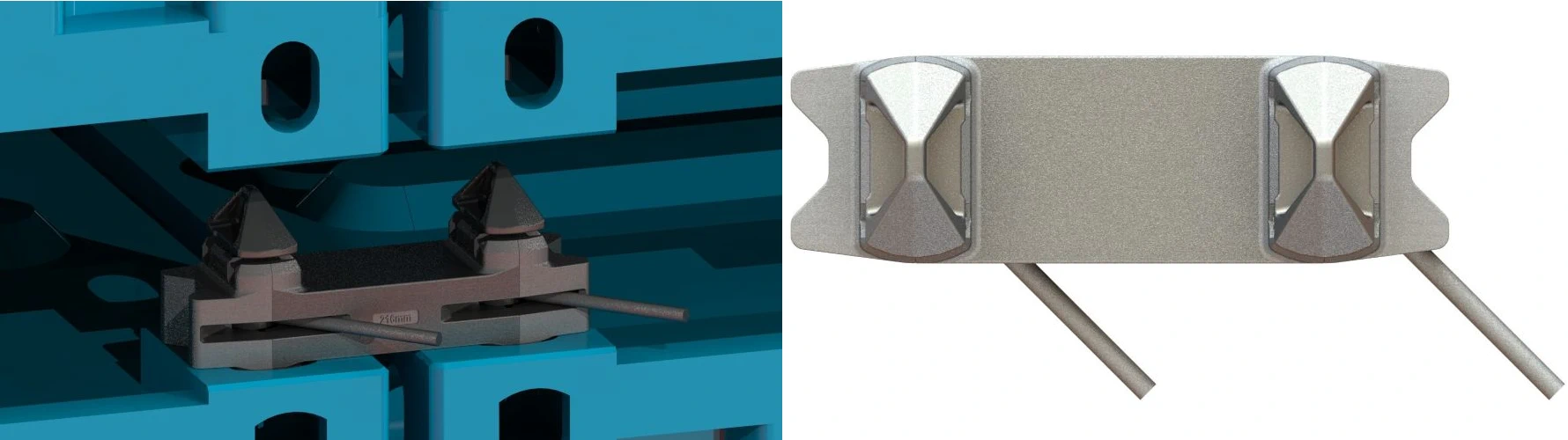
Step 1:
Align the lower cones with the twistlock body (Picture 1)
Both levers are in the mid-position as indicated on the right figure.
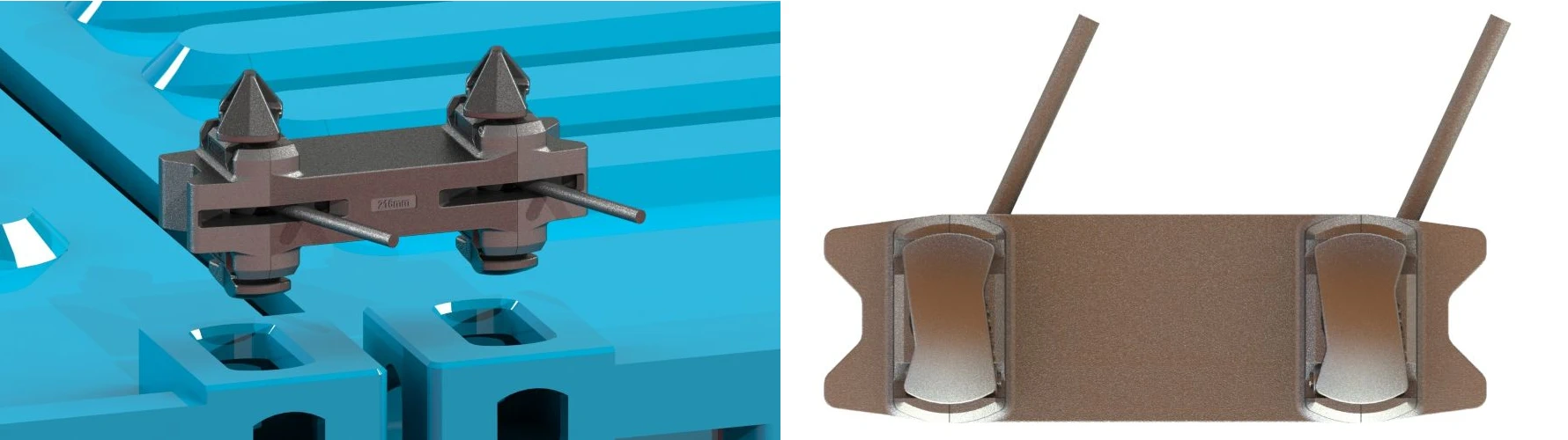
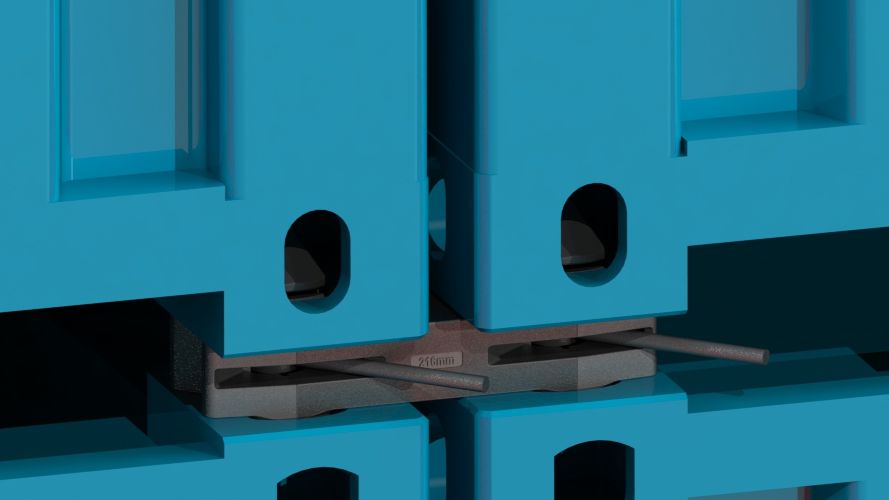
Insert the double twistlock in the lower Wind Turbine Blade frame or container. (Picture 2)
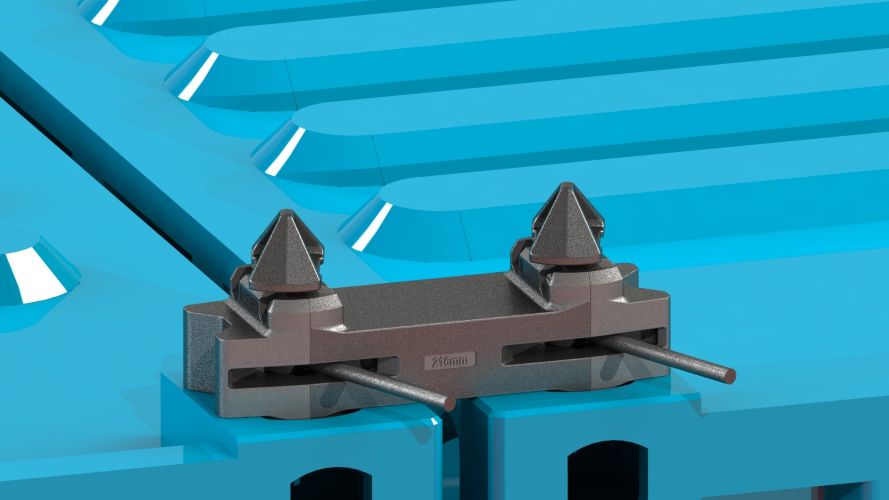
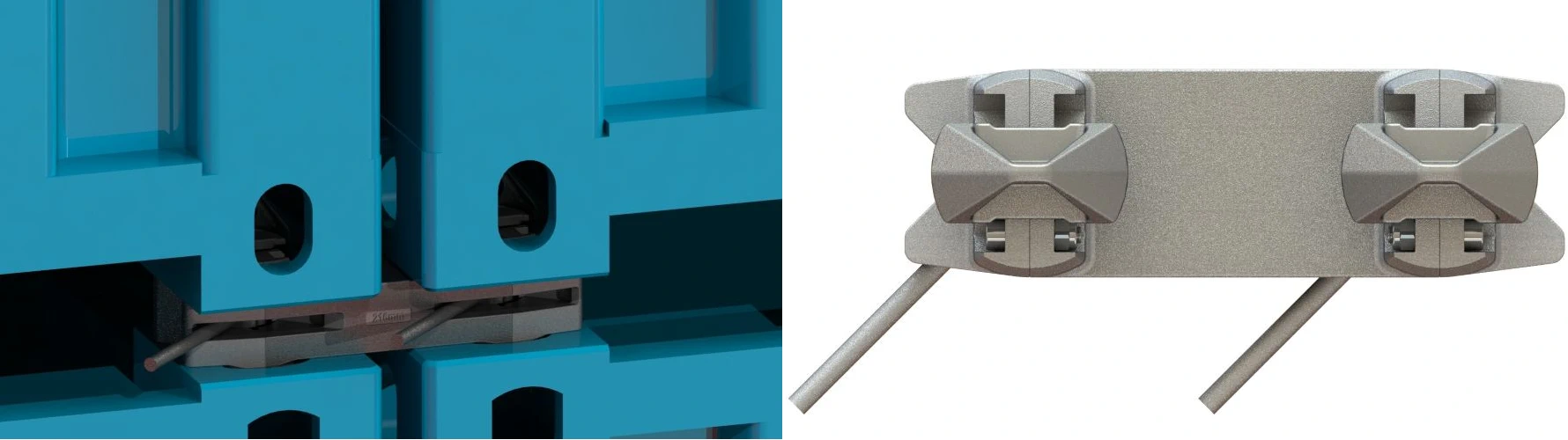
Align the top cones with the body’s (Picture 3)
Both levers are in the right position, top cones are now open.
Lowering top Wind Turbine Blade frame or container (Picture 4)
Lock the twistlocks (Picture 5)
Shift both levers to the left position.
It’s recommended to inspect and clean the double twistlock on a regular basis. This includes greasing the movable parts and checking the functioning of the mechanisms and spring action. Twistlocks with damaged cones or bodies are to be scrapped. Other damaged elements (bolts, spring,.. ) can be replaced as described in the repair instruction.
By removing the bolts and nuts, the body halves can be separated. Cone assembly, spring and ball can be removed.
What is a double intermediate twistlock used for in wind turbine transport?
A double intermediate twistlock is used to connect wind turbine blade transport frames together. It improves the stability of stacked frames and helps prevent movement during sea transport.
Why are T-12 twistlocks used for wind turbine blade transport?
The T-12 allows faster loading operations, higher stowage density, and a rigid connection between transport frames. This helps reduce handling time while maintaining cargo safety during vessel voyages.
Can the T-12 twistlock be used with standard container equipment?
The T-12 is primarily designed for wind turbine blade transport frames but can also be used in applications where conventional container twistlock arrangements are not suitable.
How often should T-12 twistlocks be inspected?
Twistlocks should be inspected regularly before and after use. Inspections should include checking the locking mechanism, springs, cones, bolts, and overall structural condition.
Can damaged T-12 twistlocks be repaired?
Certain components, such as bolts, nuts, springs, and other replaceable parts, can be replaced. However, twistlocks with damaged bodies or cones should be removed from service and scrapped.
What forces must a twistlock withstand during sea transport?
Twistlocks must withstand dynamic loads generated by vessel motions such as rolling, pitching, heaving, and acceleration caused by heavy weather conditions.
What are the benefits of stacking wind turbine blade transport frames?
Stacking increases cargo density, improves vessel space utilization, and reduces transportation costs while maintaining safe cargo securing arrangements.
Are spare parts available for the T-12 double twistlock?
Yes. Common spare parts include bolts, nuts, springs, and other replaceable components used during maintenance and repair activities.
Please enter your contact details and query below and our team will reply to your request today. Fields marked * are required

In our free e-catalogue , you will find all the info and photos about our solutions for fixed lashing, loose lashing, lifting and rigging gear. Fill in the form below and you will receive your e-catalogue quickly.

